
Product Portfolio
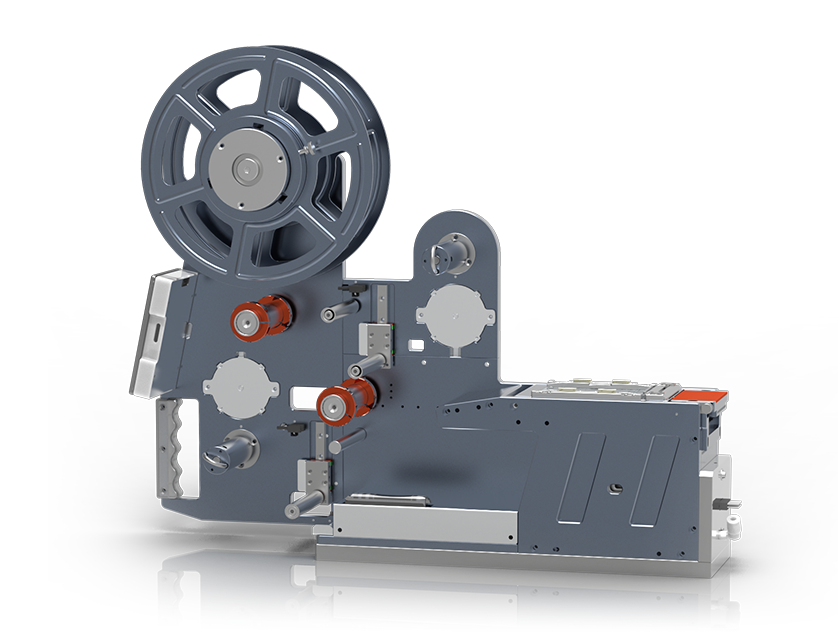
RED-CMF-S
Compact feeder
More aesthetic layout inside the equipment
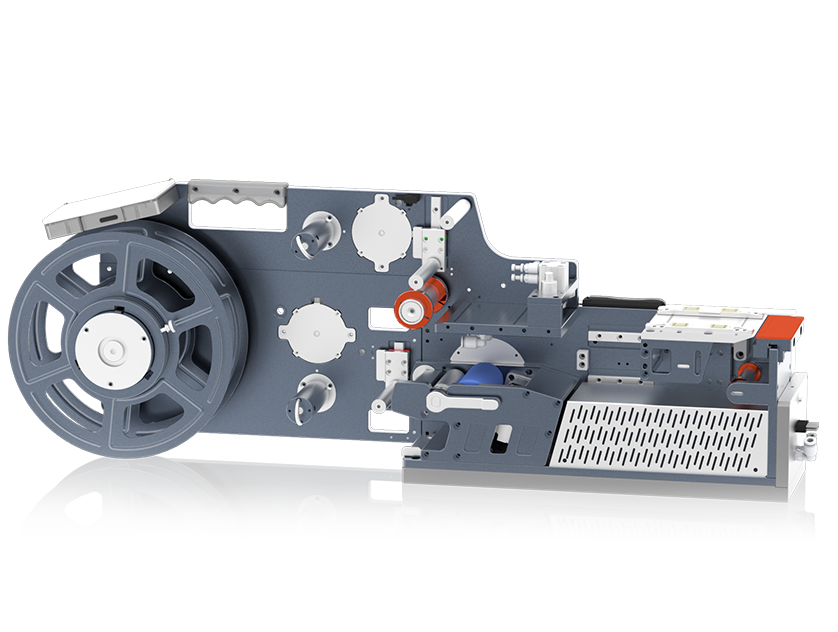
RED-CMF-L
Long feeder
Easier material changeover outside the equipment
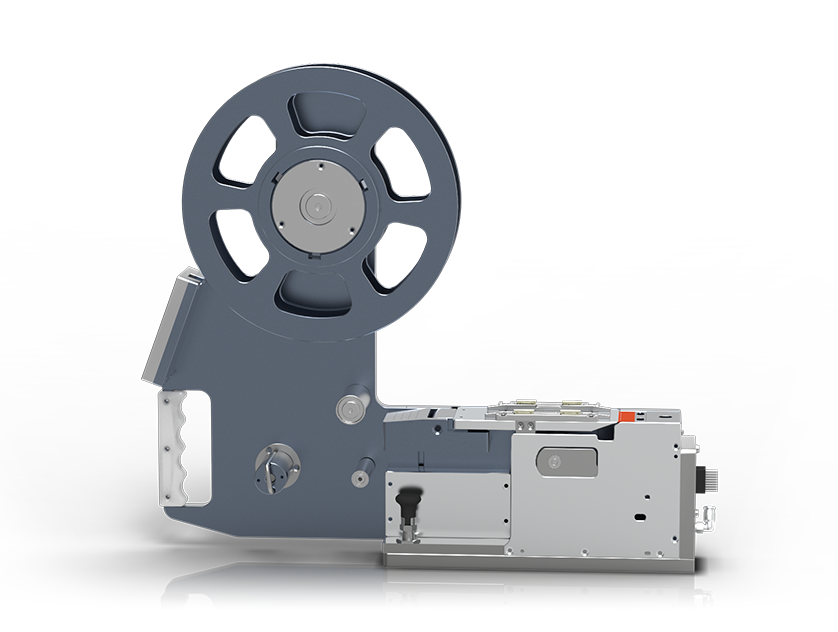
ARD-CPF-S
Compact short feeder
More layout within limited space
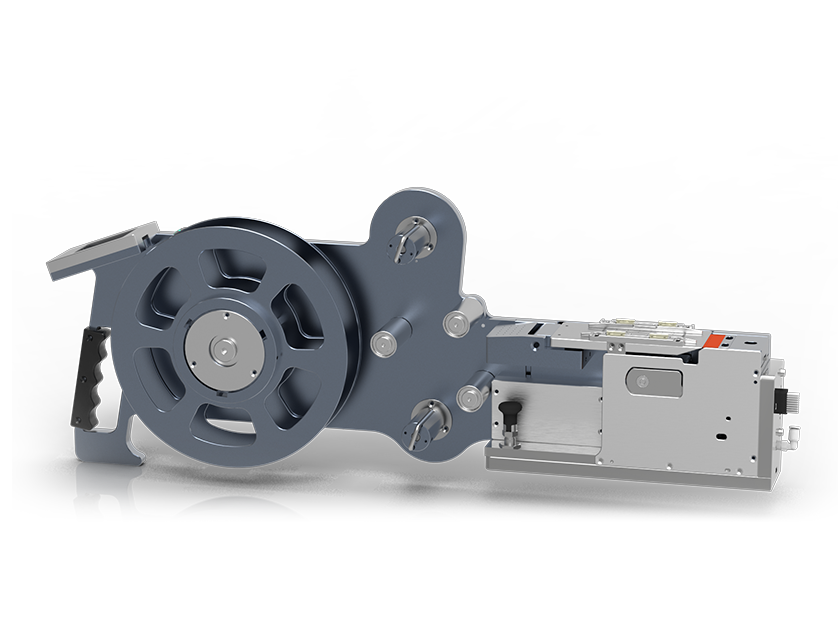
ARD-CPF-L
Compact long feeder
More layout within limited space
ARD-LBSD100-S
Push-and-lift customized model
For die-cut incoming materials with no gap and strong adhesion
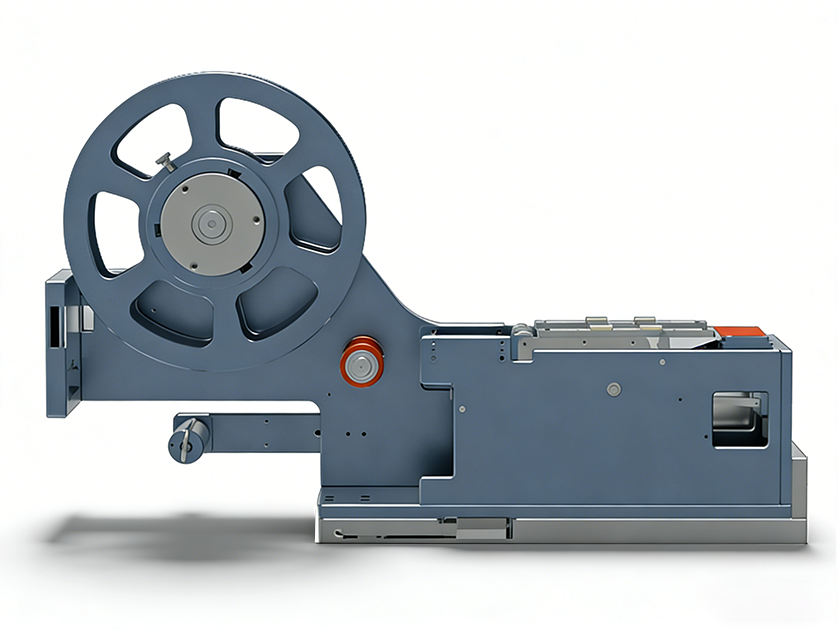
RED-CMF
Easy-peel label feeder
For easily peelable label materials
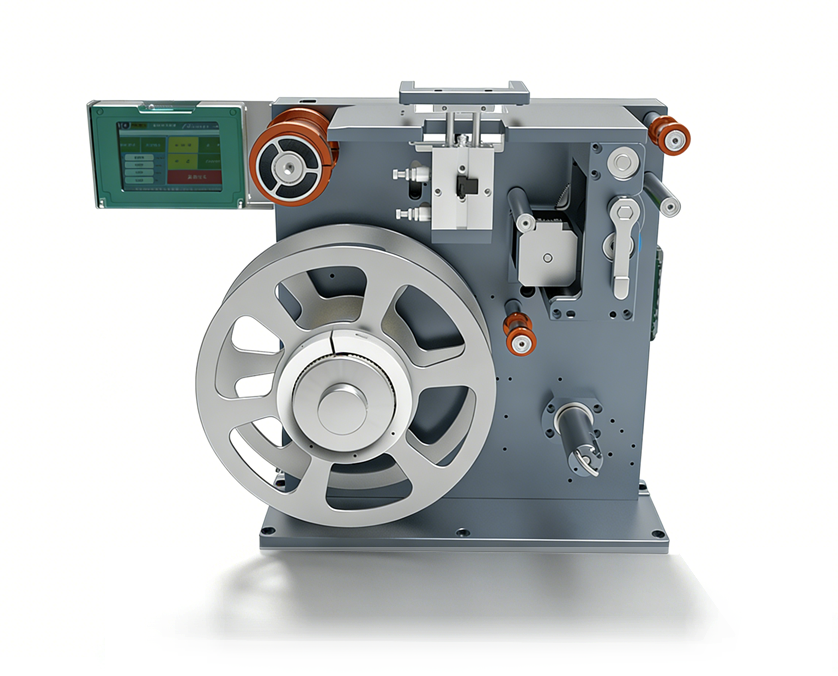
RED-RMF-S
Compact feeder
More aesthetic layout inside the equipment

RED-RMF-L
Long feeder
Easier material changeover outside the equipment
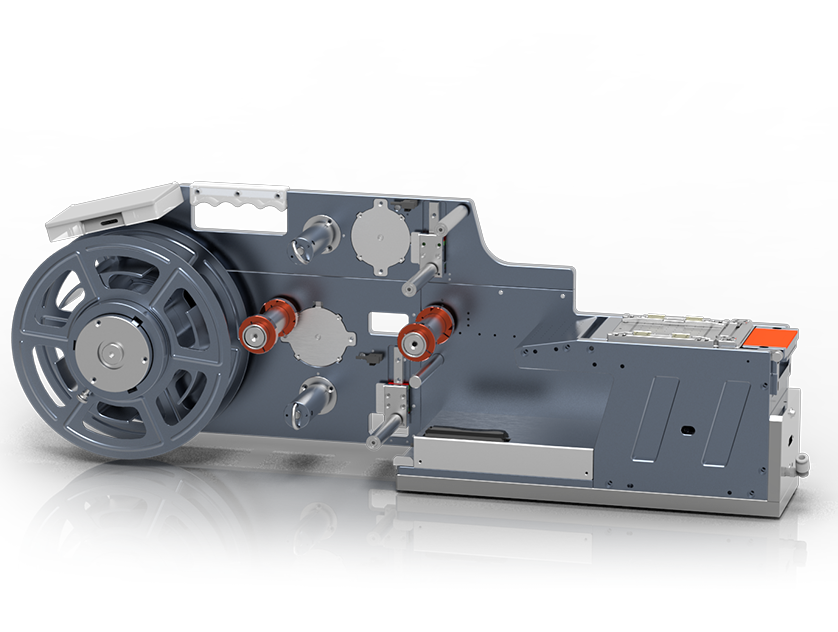
RED-RMF-300
Large retract feeder
High-precision material positioning

RED-RMF-700
Ultra-wide retract feeder
Large-capacity material handling

RED-RMF-180
S280-L-C1-A171-01-V1.0
Suction first, then peel
With built-in labeling mechanism

ARD-LBPS
Old-style sheet feeder
For hard-to-peel sheet materials

ARD-LBPS
New-style sheet feeder
Compatible with most sheet materials

ARD-LBPS
Cover-film peeling sheet feeder
For materials with top cover film

ARD-LBPS
Bottom-film peeling sheet feeder
Customized for special materials

RED-RMFF
100S300-L-C1-V1.0
Forward-peel roller laminating feeder
Adhesive side down, laminated onto the product surface

ARD-LBHG
130-***-010-L-V2.0
Special roller laminating feeder
Roller lamination for large-diameter rolls

ARD-LBHGF
100-LL200-S1-L-V2.0
Reverse-peel roller laminating feeder
Adhesive side up, laminated onto the product surface

ARD-LBG
012S200-L-C1-V1.1
Inline roller lamination and cutting
Mostly used for cutting after 3M double-sided tape roller lamination

ARD-LBC
60-51-***-028-L-V4.0
Standard cutting feeder
High-precision variable-length cutting

ARD-LBC
40S300-L170-L-C1-V2.0
Single-sided adhesive cutting feeder
With liner film recovery

ARD-LBC
040S185-L050-R-C2-V2.0
Special material cutting
Fast pull-out with precise fixed-length cutting

ARD-LBC
060XP-L0220-W0220-V4.0
Solder preform cutting feeder
Dedicated to cutting solder preforms (solder ribbons) for IGBT

ARD-1043-QT-V1.0
Applicable label length: 15-30mm
Inline print-and-transfer label feeder
The robotic arm transfers the printed labels

ARD-1043-GT-V1.0
Applicable label length: 15-60mm
Inline print-and-roller-laminate label feeder
Fast batch printing followed by roller lamination

ARD-1043-CT-V1.0
Applicable label length: 15-120mm
Inline print label feeder
Labels applied in vertical direction after printing

ARD-1043-ZT-V1.0
Applicable label length: 15-120mm
Multi-side labeling printer
For applying labels to the side and top surfaces

ARD-1043-HC-V1.0
Applicable label length: 15-160mm
Inline print-and-retract label feeder
Prints onto the platform, holds the label by vacuum, then retracts and peels

ARD-NXT08
For 8mm tape materials

ARD-NXT12
For 12-88mm tape materials

YAMAHA Tape Feeder
For YAMAHA YS/YSM series placement machines
Compatible with standard tape feeding

HANWHA Tape Feeder
For HANWHA Samsung SM series placement machines
Compatible with standard tape feeding

JUKI Tape Feeder
For JUKI KE/RS series placement machines
Compatible with standard tape feeding

YAMAHA Label Feeder
For YAMAHA YS/YSM series placement machines
Labels picked and placed directly by the machine

HANWHA Label Feeder
For HANWHA Samsung SM series placement machines
Labels picked and placed directly by the machine

JUKI Label Feeder
For JUKI KE/RS series placement machines
Labels picked and placed directly by the machine

FUJI NXT Label Feeder
For FUJI NXT series placement machines
Labels picked and placed directly by the machine

PANASONIC NPM Label Feeder
For PANASONIC NPM series placement machines
Labels picked and placed directly by the machine

ARD-FZ-RF160-24-X2.0
Heat-sealing feeder
Heat-seals the cover film onto the tape

ARD-NXT-L-SL-V1.0
Tape rewind feeder
Recovers cover film and waste tape

ARD-RX150D-B1
ARD-RX150D-B1
Precision flexible feeder
Flexible handling of fine materials

ARD-GL200D-B1
ARD-XR500D-B1-3L
Heavy-duty flexible feeder
Large-capacity flexible adaptation

Tray Feeder
For tray-packaged component auto-feeding

Delta Spider-Hand Flexible Feeder
Delta parallel robot | Precise sorting & placement | Automated bin picking

Application Scenarios
Feeding Principle
Key Advantages
The peel-then-suction mode can peel multiple rows of material at a time, with fast action and high efficiency, simple structure and convenient operation, and an obvious relative cost advantage. Feeder precision: ±0.3mm.
Limitations
The material is pushed onto the non-stick platform by the release force while being disturbed by friction in the opposite direction, so some materials may have feeding position deviation.
Required Parameters
1、Release liner width
2、Roll inner/outer diameter
3、With or without top protective film
4、Individual material size and arrangement
Basic Requirements
• The material and the base film should be easily separated in a reverse-fold test, with no obvious adhesive bleeding.
• The release liner should preferably be PET with no elasticity; a thickness of 0.05mm is optimal;
• The release liner must have no knife marks, otherwise tape breakage or delamination may occur during peeling;
• The release liner must have no splices; reserve 1 meter of blank tape at both the head and tail; the distance from the material to the edge must be no less than 5mm, and there must be a gap of more than 2mm around each individual material on the front, back, left and right.
Application Scenarios
Feeding Principle
Key Advantages
The suction-then-peel mode provides high discharge precision and works well for materials that are difficult to peel or tend to shift or wrinkle after peeling. Meanwhile, the retract feeder also incorporates push feeder functionality, enabling one machine for multiple uses. Feeding precision: ±0.2mm.
Limitations
As the retract feeder sucks first and then peels, the suction cup briefly dwells on the feeder during peeling while the peel blade retracts to peel the material; the suction cup dwell time is approximately ≤1s.
Required Parameters
1、Release liner width
2、Roll inner/outer diameter
3、With or without top protective film
4、Individual material size and arrangement
Basic Requirements
• The material and the base film should be easily separated in a reverse-fold test, with no obvious adhesive bleeding.
• The release liner should preferably be PET with no elasticity; a thickness of 0.05mm is optimal;
• The release liner must have no knife marks, otherwise tape breakage or delamination may occur during peeling;
• The release liner must have no splices; reserve 1 meter of blank tape at both the head and tail; the distance from the material to the edge must be no less than 5mm, and there must be a gap of more than 2mm around each individual material on the front, back, left and right;
Application Scenarios
Feeding Principle
【Old-Style Sheet Feeder】 consists of three parts: a material magazine, a loading module and a label peeling head. The loading module uses suction cups to pick up a sheet from the magazine and place it on the label peeling head. The label peeling head is designed with a material pressing structure, a peel blade, a receiving platform and a pulling structure. The pressing structure presses the tail of the base film, the platform structure bends the head of the base film downward, and then the pulling structure engages with the base film. The pulling structure moves in sync with the pressing mechanism to pull the base film; through the bending at the peel blade, the material is peeled off and pushed out onto the receiving platform.
【Film Peeling Sheet Feeder】 is designed with a material magazine, a film peeling gripper, a receiving platform and a transfer module. The transfer module takes one sheet out of the magazine and moves it to the film peeling position; the gripper clamps the base film, bends it downward and moves out of the way; then the transfer module moves right with the material while the gripper peels off the base film. The transfer module continues moving right and places the material, with the base film removed, onto the receiving platform.
Key Advantages
Wide applicability; can handle sheet materials of various materials and thicknesses, with high feeding precision.
Limitations
High adaptability requirements for materials and products; commissioning is relatively complex.
Required Parameters
1、Release liner material, length and width
2、Individual material size and arrangement
3、Material type and characteristics
4、With or without top protective film
Basic Requirements
• The base film/release liner width should be within 200mm and length within 300mm, overall flat, with a certain tensile strength (5kg/50mm width);
• A single material should be no smaller than 3mm; the material center-to-center pitch is recommended to be unified at 5mm or its integer multiples.
• Reserve more than 25mm of blank at the head and tail of the base film for fixing and pulling, and more than 10mm on the left and right sides to allow clearance for the suction cups of the transfer module.
Application Scenarios
Feeding Principle
Retract roller laminating feeder: The label is peeled by the retract mode; the peel blade retracts and the roller presses down to laminate the label onto the product.
Reverse-peel roller laminating feeder: Depending on whether the label is applied to the front or the back of the product, we divide the feeder into forward roller lamination or reverse roller lamination.
Inline roller laminating feeder: When the product arrives directly below the roller, the roller presses down and the product or the feeder moves until the material is fully peeled, then the feeder resets.
Key Advantages
Uniform roller lamination pressure and good application effect; suitable for continuous production with high efficiency.
Limitations
High adaptability requirements for materials and products; commissioning is relatively complex.
Required Parameters
1、Release liner width
2、Roll inner/outer diameter
3、With or without top protective film
4、Individual material size and arrangement
Basic Requirements
• Retract roller lamination requires a flat application surface; inline roller lamination is compatible with curved products.
• The roll material must be single-row. The minimum individual label size is 20X20mm.
Application Scenarios
Feeding Principle
Key Advantages
High cutting precision, adjustable cutting length, suitable for a variety of materials, and a high degree of automation.
Limitations
High requirements for the flatness and stability of the material; the cutting tools need regular maintenance.
Required Parameters
1、Cutting length
2、Cutting precision (±0.5mm)
3、Material thickness
4、Cutting speed
5、Incoming material: single-sided tape / double-sided tape
Basic Requirements
• The material must have good cutting performance;
• The material thickness must be uniform, without any variation;
Solder Preform Cutting Feeder Intro
The solder preform cutting feeder is an automated device specially used for producing power semiconductors (IGBT). The cutting specification can be adjusted according to the wafer size, and it can also die-cut solder preforms sized for soldering capacitors and resistors (feed length of about 0.8mm). At present, mainstream solder ribbons are mainly tin-based solder ribbon and lead-based solder ribbon.
Working Principle
Working principle: Through sensors and internal structures, a high-speed and high-precision closed-loop "feeding-cutting" process is realized, precisely controlling the conveying and cutting of roll solder ribbon. Multi-specification feeders adapt to solder ribbons of different specifications.
Parameter Details
Parameter details: cycle time: 0.2-0.3s/p, precision: ±0.07mm, applicable cutting specifications: 0.5≤L≤20, 1≤W≤20, host computer communication: RS232, touch screen display control, product weight: about 9KG, rated power supply: 24V DC 8.0A
Nozzle Sensor Version Working Principle
Nozzle sensor version working principle: The nozzle moves down and blocks the through-beam fiber optic light source, triggering a nozzle-in-position signal that controls the lower cutting blade to rise and cut the material. After the nozzle takes away the cut material, the light received by the fiber optic returns to normal, triggering a nozzle-leave signal that controls the feeding assembly to continue feeding.
Nozzle Sensor Version Advantages
Advantages: The feeding stroke and cutting action are controlled by a microcontroller, providing stable output and high cutting precision. Ample space allowance suits materials of different specifications, and any length can be cut (including lengths within 2mm).
Vacuum Suction Version Working Principle
Vacuum suction version working principle: When the material is in position, the fiber optic determines that feeding is complete and gives feedback; the vacuum turns on to hold the material, then the lower cutting blade performs the cutting; after cutting is completed, the vacuum turns off and waits for the nozzle to take away the material; the fiber optic determines that pick-up is complete and gives feedback, and the feeding assembly continues feeding. When the fiber optic determines that feeding is in position again, the next cutting cycle begins.
Vacuum Suction Version Advantages
Advantages: In the vacuum version, the next cutting cycle can begin immediately after the nozzle takes away the material, offering higher cutting efficiency. The feeding stroke and cutting action are controlled by a microcontroller, providing stable output and high cutting precision, with timely feedback on whether the material has been taken away. Ample space allowance suits materials of different specifications.
Application Scenarios
Feeding Principle
Key Advantages
The printed content is variable and supports multiple formats such as barcodes and QR codes, offering high flexibility and easy traceability management.
Limitations
High requirements for label material and ambient temperature; the maintenance cost is slightly higher than that of ordinary feeders.
Required Parameters
1、Print content format
2、Label size range
3、Print speed
4、Print resolution
Basic Requirements
• The label material must support thermal transfer or direct thermal printing;
• The surface of the printing area must be flat, without obvious bumps or hollows;
Technical Specifications
ARD-ZBL-1043-ARD-QT-V1.0
Equipment model: ARD-ZBL-1043-ARD-QT-V1.0
Label dispensing method: Push
Label dispensing speed: 3s/pcs
Label dispensing stroke: 180mm (adjustable)
Label dispensing precision: ±1mm
Print engine: ZEBRA
Print resolution: 300dpi
Print width: 0-104mm
Label width: 16-104mm
Label length: 15-30mm
ARD-ZBL-1043-ARD-GT-V1.0
Equipment model: ARD-ZBL-1043-ARD-GT-V1.0
Label dispensing method: Roller pressing
Label dispensing speed: 3s/pcs
Label dispensing stroke: 100mm (adjustable)
Label dispensing precision: ±1mm
Print engine: ZEBRA
Print resolution: 300dpi
Print width: 0-104mm
Label width: 16-104mm
Label length: 15~160mm
ARD-ZBL-1043-ARD-CT-V1.0
Equipment model: ARD-ZBL-1043-ARD-CT-V1.0
Label dispensing method: Pneumatic pressing
Label dispensing speed: 3s/pcs
Label dispensing stroke: 30~260mm (adjustable)
Label dispensing precision: ±1mm
Print engine: ZEBRA
Print resolution: 300dpi
Print width: 0-104mm
Label width: 16-104mm
Label length: 15~120mm
ARD-ZBL-1043-ARD-ZT-V1.0
Equipment model: ARD-ZBL-1043-ARD-ZT-V1.0
Label dispensing method: Swing-arm side labeling
Label dispensing speed: 3s/pcs
Label dispensing angle: rotatable 90° (adjustable)
Label dispensing stroke: set according to label condition
Label dispensing precision: ±0.5mm
Print engine: ZEBRA
Print resolution: 300dpi
Print width: 0-104mm
Label width: 16-104mm
Label length: 15-120mm
ARD-ZBL-1043-ARD-HC-V1.0
Equipment model: ARD-ZBL-1043-ARD-HC-V1.0
Label dispensing method: Retract
Label dispensing speed: 5s/pcs
Label dispensing stroke: set according to label condition
Label dispensing precision: ±0.5mm
Print engine: ZEBRA
Print resolution: 300dpi
Print width: 0-104mm
Label width: 16-104mm
Label length: 15-160mm
Application Scenarios
Feeding Principle
Key Advantages
High feeding precision, suitable for high-speed placement and assembly, compatible with standard tape packaging formats; feeder specifications can be customized for different placement machine brands.
Limitations
Standardized tape must be used; non-standard tape requires a customized feeder.
Required Parameters
1、Placement machine brand & model
2、Tape width
3、Component pitch
4、Pick-up method
Basic Requirements
• The tape must have no obvious deformation and intact sprocket holes;
• Components must be reliably fixed in the carrier tape and not easily loosened;
Application Scenarios
Feeding Principle
Key Advantages
No extra labeling station or equipment is required; labels are placed using the existing capacity of the placement machine with high precision and fast cycle time, seamlessly integrated into the SMT line.
Limitations
The corresponding feeder specification must be selected according to the placement machine brand and model, and label size is limited by the machine nozzle and program.
Required Parameters
1、Placement machine brand & model
2、Label size
3、Liner width
4、Label pitch & layout
Basic Requirements
• Labels must be supplied in roll form with a splice-free liner;
• Label pitch must match the feeder stepping specification;
• Label size must be within the pickable range of the machine nozzle;
Application Scenarios
Feeding Principle
Key Advantages
It automates loading, sealing and reeling, greatly improving packaging efficiency and reducing labor costs.
Limitations
The system is relatively complex and has high requirements for equipment commissioning and maintenance.
Required Parameters
1、Carrier tape cavity dimensions
2、Part dimensions and tolerances
3、Sealing material
4、Packaging cycle time
Basic Requirements
• Part dimensions must match the carrier tape cavities to avoid jamming or flipping;
• The sealing material must meet the temperature and pressure requirements to ensure firm sealing;
Application Scenarios
Feeding Principle
Key Advantages
Strong versatility and adaptability to a variety of parts; quick changeover can be achieved simply by replacing the tray or adjusting parameters.
Limitations
High requirements for the vision system and algorithms; the initial commissioning workload is relatively large.
Required Parameters
1、Part size range
2、Part weight
3、Loading cycle time
4、Vision recognition precision
Basic Requirements
• Thin products (such as 0.1mm thin sheets) tend to stick to the bottom of the tray; the tray needs to be customized.
• Irregularly shaped products cannot stand stably; a customized tray is required.
• When two vibratory feeders are placed close to each other, our company's vibration isolation solution can be used to avoid mutual interference during vibration.
• The part material must be suitable for vibratory conveying;
Application Scenarios
Feeding Principle
Key Advantages
Each component sits in an isolated cavity with good protection and no squeeze damage. Compatible with irregular large parts, cavity customizable. Stable pick position, low material rejection. Flexible multi-variety changeover. Anti-static trays are reusable. Repeat positioning accuracy up to ±0.03mm.
Limitations
Slower feeding cycle than tape feeders, lower throughput limit. Multi-layer models occupy more floor space. Single-layer versions require manual tray changeover. Non-standard trays require mold customization, higher programming and debugging effort.
Required Parameters
1、Component L×W×H and single-piece weight
2、Pin pitch and coplanarity requirements
3、Tray outer dimensions (standard JEDEC 230×335mm)
4、Cavity size, depth and row/column spacing
5、Stack tray capacity (layers) and repeat positioning accuracy
6、Drive method, air supply and communication interface (GPIO/TCP-IP)
Basic Requirements
• XY repeat positioning accuracy ≥ ±0.03mm, no tray shift during pick-up
• Tray surface resistance 10⁴-10¹¹Ω (dissipative type), frame reliably grounded
• Compliant with ANSI-ESD S20.20 anti-static standard
• Empty-tray warning and low-material detection
• Supports cavity skip and multiple tray recipe storage switching
Application Scenarios
Feeding Principle
Key Advantages
Vision + control all-in-one, no-code changeover; flexible layout, standalone or inline; EtherCAT servo + dynamic tracking, no downtime during placement; signal compatible with mainstream equipment; multi-function in one cell; voice-coil + dual vision = zero surface damage.
Limitations
Higher initial investment vs. vibratory feeders; high-reflectivity parts may need custom vision; D600 footprint larger (420×690×930mm); bottom camera optional (500W).
Required Parameters
1、Model (D300/D400/D600)
2、XY/Z travel (mm)
3、Max payload (kg)
4、Max part size (mm)
5、Machine size (mm) / Weight (kg)
6、Repeatability ±0.15mm
7、Camera (V1 single / V2 dual)
8、Harmonic drive / Protocol (EtherCAT / IO)
Basic Requirements
• Part size ≤ 30mm (custom above)
• No strong reflective / transparent surfaces
• Mounting bench load ≥ machine weight
• Stable AC220V supply
• Reserved EtherCAT / IO interface
• Ambient temp 10–40℃